Free Wireframe Starter Kit →

Project Overview
A comprehensive website redesign of a housing development in Colorado, USA, based on user research that included user personas, evaluations, interviews, and a spreadsheet analysis. I designed low-fidelity wireframes, high-fidelity wireframes, and an interactive prototype.
Role: UX/UI Designer, Visual Designer
Tools: Figma, Adobe Creative Suite
Research & Industry Standards
Before jumping into designing screens, I embarked on a comprehensive research sprint by conducting a heuristics evaluation of the current website by evaluating industry-standard heuristics and severity scales. To dive deeper, I conducted an accessibility audit that exposed usability issues using WCAG principles and success criteria. I investigated to see if the design was perceivable, operable, understandable, and robust.
Empathizing
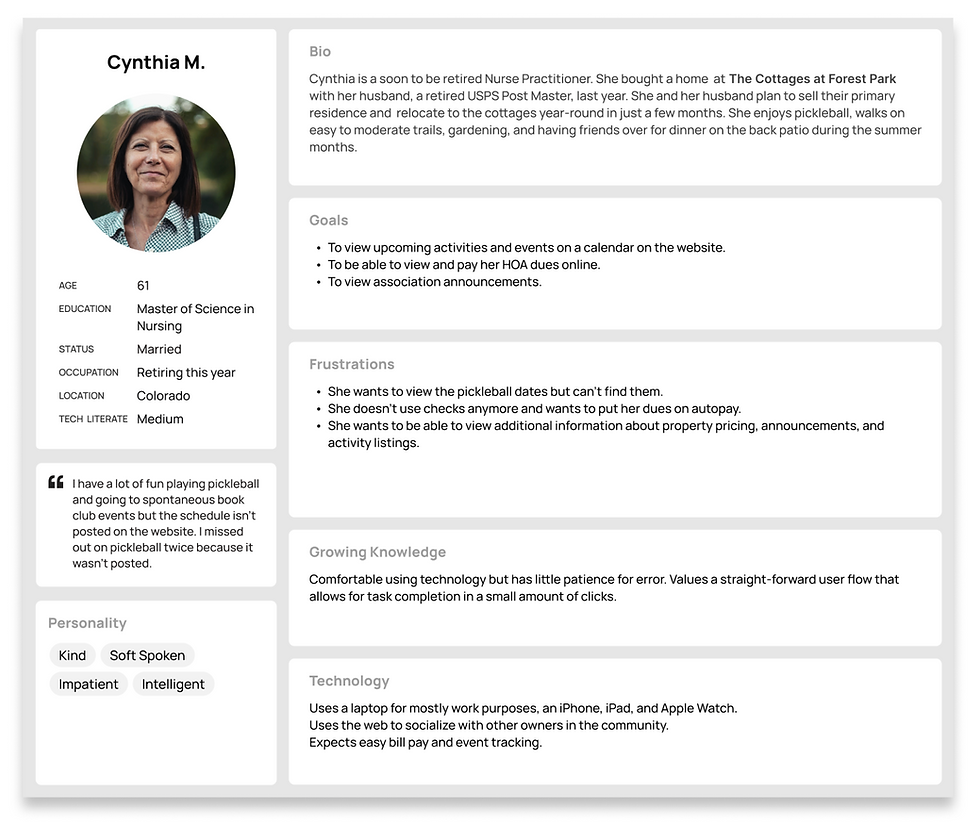
Additionally, I created a survey, user personas, and conducted usability testing. The user personas created represented different members of the target audience. I analyzed the evaluation and accessibility audit to expose potential pain points users may encounter. With the results, I created questions for a survey that was sent to 53 participants.


Research Continued...
To empathize further, I conducted usability testing with 30 participants. The goals for conducting the usability testing were to evaluate how potential users navigate the website, locate important information, and complete given tasks related to exploring housing options, understanding community features, and contacting The Cottages at Forest Park.
I created 3 scenarios and 9 tasks for users to complete. I provided users with pre-test questionnaires to gather the demographics, needs, and opinions of the target users. Using an observation sheet, I collected the user's journey, the amount of time it took, whether they were successful or not, and noted observations and comments made.

Usability Issues Exposed
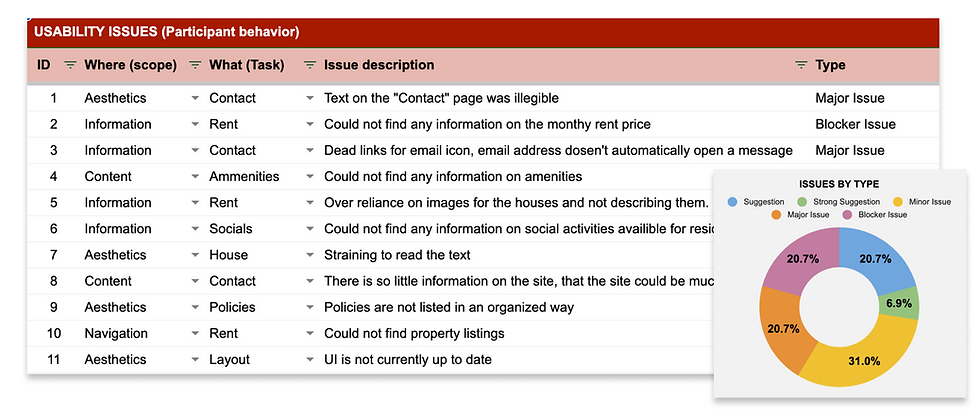
After reviewing the results of the usability testing, I created a list of issues (pain points) the participants ran into. I classified these issues into categories and severity types. Using the data in the usability issues spreadsheet, I created a list of solutions to implement into the redesign.

Wireframing & Prototyping
Using the data pertaining to solutions, I created low-fidelity wireframes that had the potential to resolve the current usability issues. The wireframes were presented and finalized.
The final step of the project allowed me to demonstrate my prototyping skills. I took my low-fidelity wireframes and translated them into a high-fidelity interactive prototype. Each frame that was created had a corresponding justification summary and user flow.

Final Delivery
The project took about 135 hours in total. I explored different techniques for reviewing websites for usability issues. I reviewed case studies about the effects of usability and user experience on users. I gained an understanding of how the same principles and skills can be applied to the design of any product.
The project allowed me to take on the role of user researcher, usability engineer, and user experience designer. Throughout the project I followed design thinking methodology to create an improved interface, which included empathizing with users, ideating, evaluating, and improving the current website based on research results.
